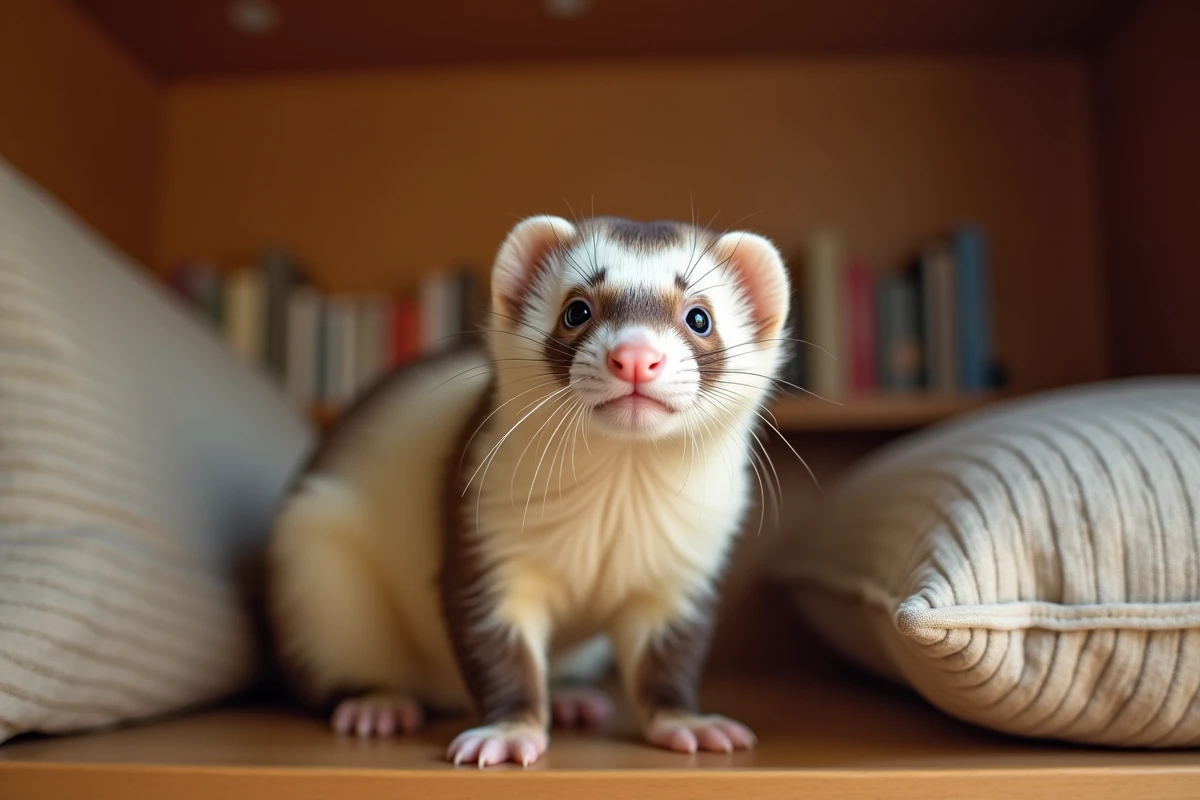
Weasel and ferret share the family of mustelids, with a brown coat and an elongated silhouette. The resemblance stops there. One is a wild animal protected by French regulations, while the other is a domesticated carnivore that has been around for thousands of years. Comparing weasel or ferret before considering adoption amounts to measuring two distinct realities: legal status, health needs, compatibility with a household already occupied by a dog or cat.
Legal Status and Ownership in France: Weasel vs. Ferret
The weasel (Martes foina) is a wild species. Its ownership by an individual is prohibited without specific prefectural authorization. Since January 2025, a decree also prohibits individuals from using weasel traps, in favor of exclusively non-lethal deterrent methods (decree no. 2024-1478 of December 28, 2024). Capturing or keeping a weasel at home exposes one to penalties.
The ferret (Mustela putorius furo), on the other hand, is recognized as a domestic animal under French law. Its ownership does not require any authorization. It must be identified by microchip and vaccinated against rabies for any transport outside the territory. This difference in status settles the debate for anyone looking for a legal companion: only the ferret is adoptable.
To learn everything about the domestic weasel and the precise distinctions between these two mustelids, the subject deserves to be explored further before any decision.
| Criteria | Weasel | Ferret |
|---|---|---|
| Status | Protected wild species | Domestic animal |
| Legal Ownership | Prohibited without authorization | Free, without authorization |
| Way of Life | Nocturnal, solitary | Crepuscular, social |
| Diet | Opportunistic omnivore | Strict carnivore |
| Life Expectancy | Variable in the wild | About 6 to 10 years in captivity |
| Co-habitation with Dog/Cat | Impossible (wild animal) | Possible under protocol |
| Veterinary Monitoring | Not applicable | Endocrine follow-up recommended from 3 years |
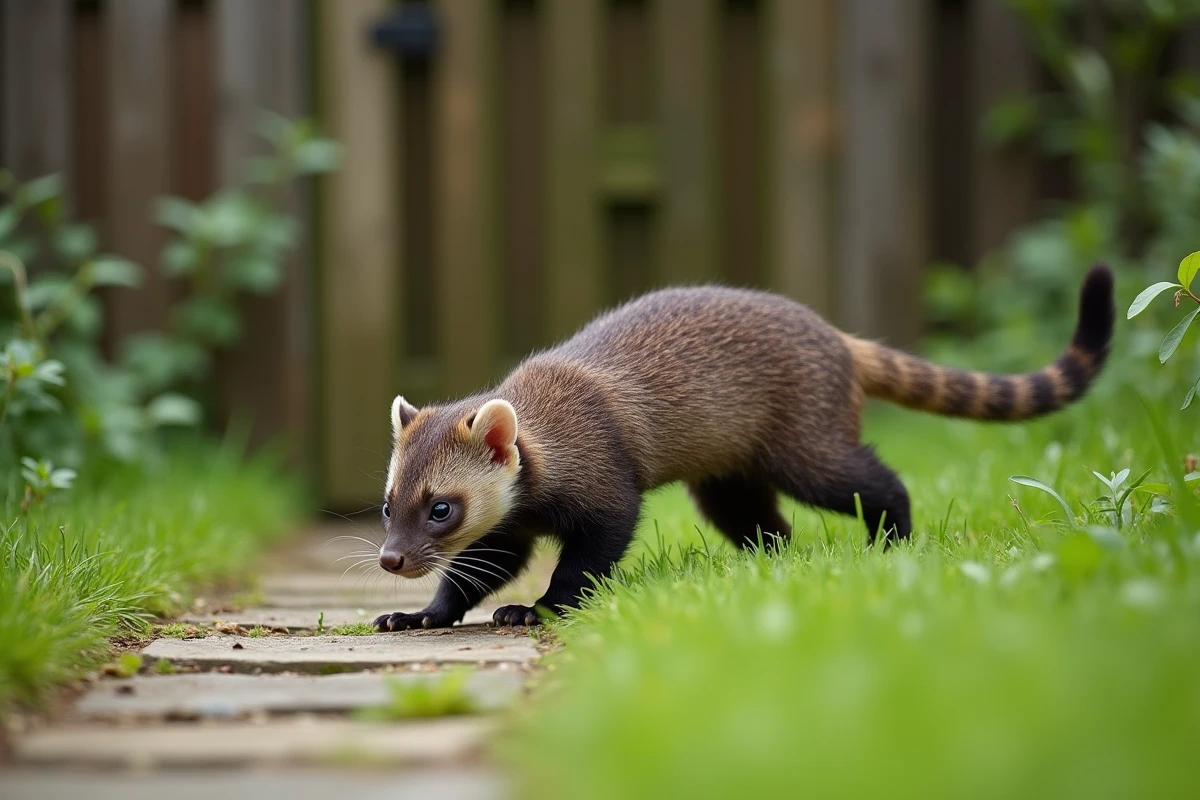
Health Risks of the Ferret: What Adoption Really Implies
The domestic ferret has a high prevalence of endocrine cancers, particularly hyperadrenocorticism, which is significantly more common than in wild mustelids like the weasel. This condition affects the adrenal glands and often manifests after the age of three.
Specialized NAC (new pet) veterinary follow-up is essential. Consultations include regular screening for adrenal tumors, insulinomas, and lymphomas. The cost of these treatments exceeds that of a cat or hamster, which helps explain the significant increase in ferret abandonments in French shelters observed since 2024.
Diet plays a direct role in prevention. The ferret is a strict carnivore whose diet excludes fruits, vegetables, and grains. An unsuitable diet accelerates metabolic disorders. Specific ferret kibble, with high animal protein content, remains the basis recommended by NAC veterinarians.
- Rabies vaccination mandatory for any cross-border travel, recommended routinely
- Chemical (implant) or surgical sterilization to limit the risk of adrenal pathologies
- Annual endocrine screening starting at three years, including abdominal ultrasound
- Identification by microchip, required by regulations
Integrating a Ferret into a Household with a Dog or Cat: Co-habitation Protocol
The question of multi-species cohabitation is the primary reason for hesitation among potential adopters. A ferret can coexist with a dog or cat, but successful cohabitation relies on a gradual protocol, not just a simple introduction.
First Phase: Physical Separation and Scent Exchanges
Specialized breeders recommend starting by placing the ferret in a separate room. The first few days are exclusively for scent exchange: placing a cloth imbued with the ferret’s scent near the dog or cat, and vice versa. This phase generally lasts one to two weeks.
Second Phase: Controlled Meetings
Introductions are made with the ferret in a cage, door open, under direct supervision. The dog must be kept on a short leash. The goal is to observe each animal’s reactions without allowing direct physical contact. Any predatory posture (staring, body tension) requires a return to the previous phase.
Third Phase: Supervised Free Interactions
After several meetings without incident, interactions outside the cage begin, always under human supervision. A ferret roaming freely in a house moves quickly and explores everything, which can trigger the chase instinct of a hunting dog or a territorial cat. The first weeks of free cohabitation remain a period of active observation.
Dog breeds with a strong predatory instinct (terriers, greyhounds) pose a real risk. Adult socialized cats adapt better than kittens, which can injure a ferret through overly rough play.
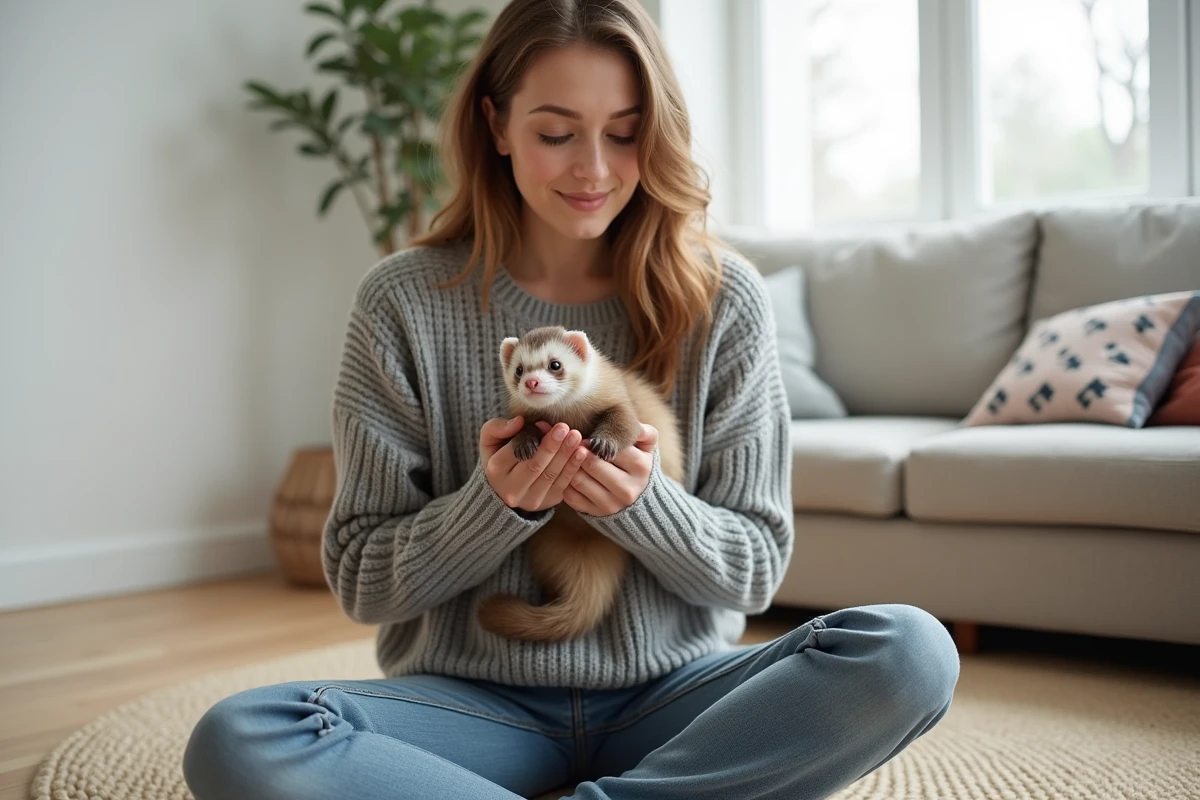
Enrichment and Living Space for the Ferret: Sizing Before Adoption
Underestimating the need for environmental enrichment has been identified as a major factor in recent abandonments. A ferret sleeps between fourteen and eighteen hours a day, but its waking phases require a secure play space outside the cage of at least several hours daily.
The cage serves as a refuge, not a permanent living space. It should have multiple levels, hammocks, tunnels, and a litter box. The ferret digs, nibbles, and squeezes into any gap of a few centimeters. Every accessible room must be audited: protected electrical cables, blocked openings, household products out of reach.
- Tunnels and rigid tubes to simulate burrows, a fundamental behavioral need of the ferret
- Regular rotation of toys to maintain cognitive stimulation
- Supervised daily outings outside the cage, ideally in the late afternoon when activity is at its peak
The ferret is a social animal that suffers from prolonged isolation. Adopting a single individual means compensating with strong daily human interaction. Two ferrets generally cohabitate well and self-stimulate, which reduces destructive behaviors related to boredom.
The choice between weasel and ferret is not really one from a legal standpoint. The only adoptable option remains the ferret, with a veterinary, spatial, and temporal commitment that the comparative table above allows one to measure. Households already occupied by a dog or cat can welcome a ferret, provided they adhere to a strict cohabitation protocol and budget for health care adapted to the specific endocrine pathologies of the species.