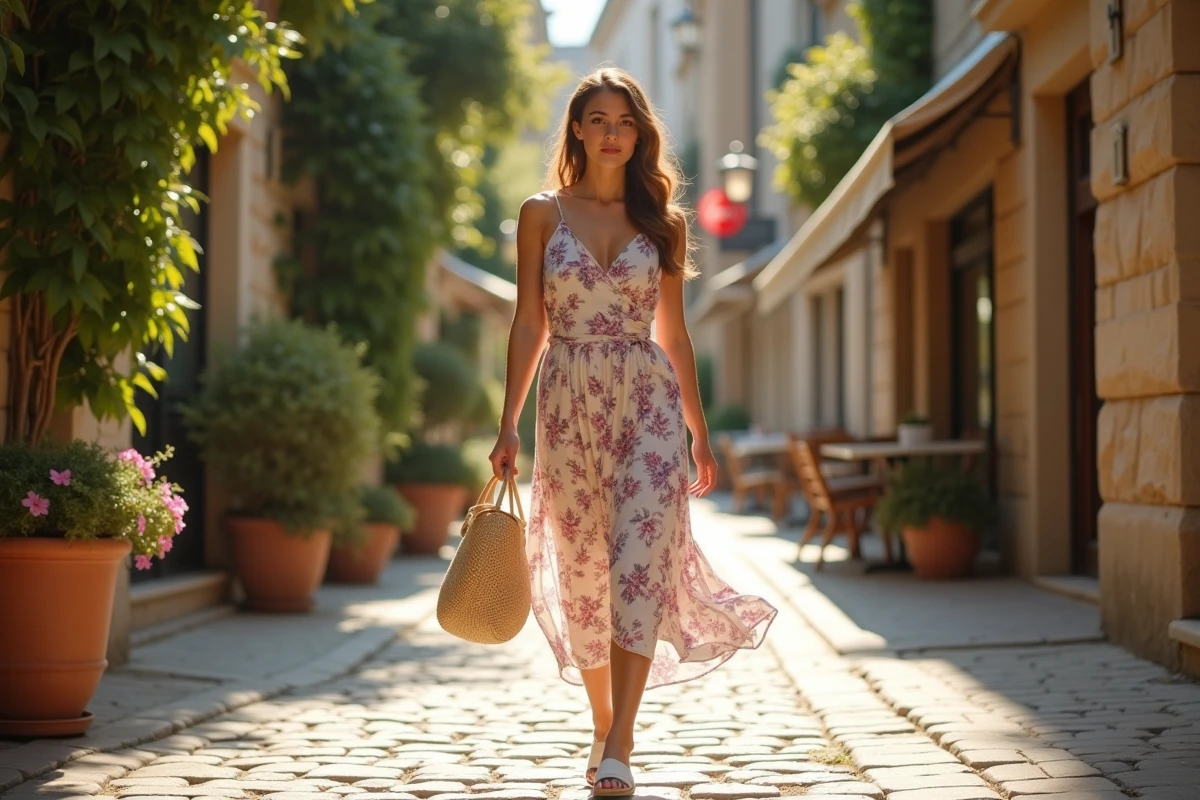
At 23 °C, the choice of clothing relies less on the displayed temperature than on the actual thermal sensation. Relative humidity, wind, direct sunlight: these three parameters alter the perception of comfort by a good ten degrees. An outfit designed for 23 °C in a shaded city does not work on a south-facing terrace. It is this discrepancy that makes this temperature so tricky when it comes to dressing.
Thermal sensation at 23 °C: the parameter that fashion guides ignore
Meteorological services, including Météo-France, now recommend thinking in terms of sensation rather than raw temperature to adapt one’s outfit. At 23 °C with high humidity and no wind, the body perceives a much higher heat. Conversely, breezy 23 °C at the end of the day produces a sensation close to autumn chill.
In practical terms, the same linen dress reacts very differently depending on the climatic context. Worn on a May morning with a slight breeze, it refreshes. Worn on a September afternoon under direct sunlight and stagnant humidity, it clings and loses all visual fluidity.
We recommend systematically checking three data points before putting together an outfit for the day: relative humidity (above average, prioritize breathable fabrics), wind speed (below comfort threshold, plan for a removable piece), and UV index. The latter point is often overlooked: at very sunny 23 °C, UPF-rated fabrics or breathable long sleeves protect without overheating.
To complement this approach with concrete silhouette suggestions, we have identified outfit ideas for 23 degrees on Pulpe de Coton that illustrate this principle of adaptation to context well.
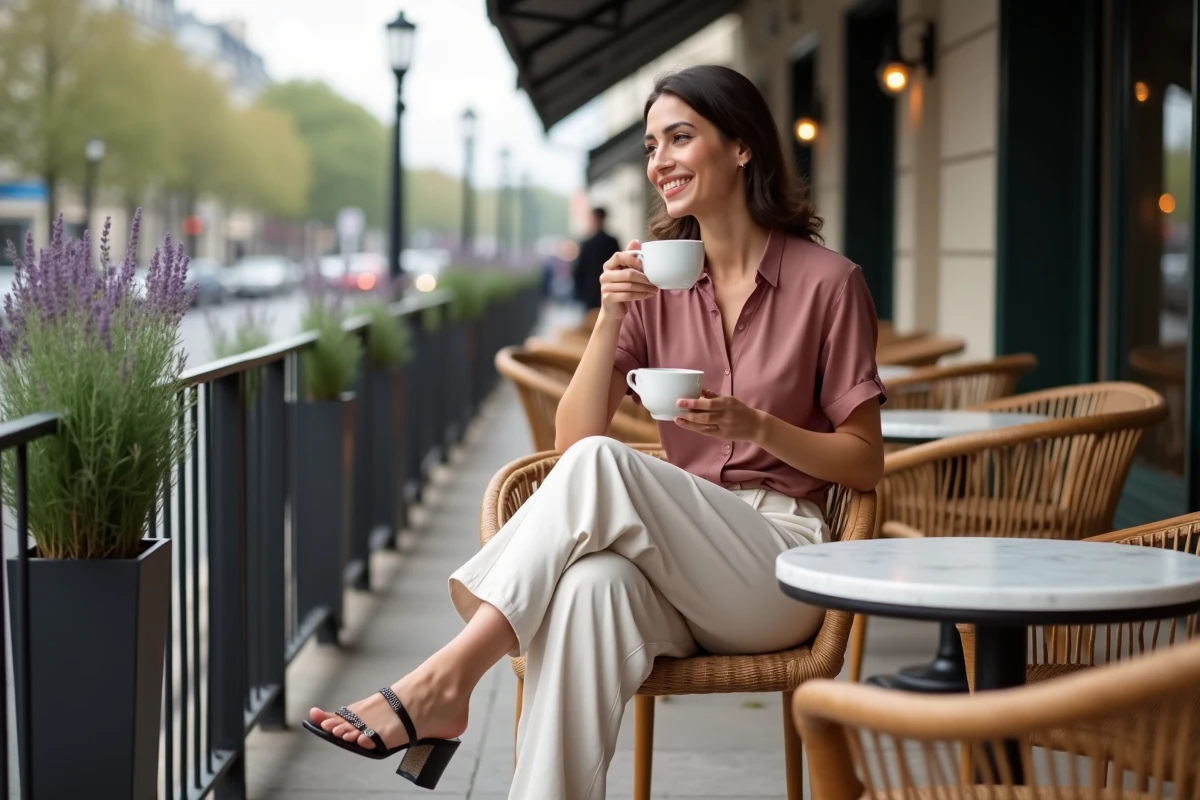
Relaxed tailoring cuts and fluid materials: the 23 °C wardrobe that really works
The relaxed tailoring trend, strengthened over several seasons, precisely addresses the constraint of mild temperatures. Loose, unlined silhouettes allow air circulation between the fabric and the skin, whereas a fitted cut traps body heat.
Key structured pieces to prioritize
- The light unlined jacket, in cotton or blended linen, worn open over a simple top. It structures the silhouette without creating a sauna effect and can be removed in seconds when the sun is strong.
- The high-waisted wide-leg pants, in lightweight viscose or crepe. The straight or slightly flared cut frees the legs and avoids sticking to the skin, a recurring issue with slim pants in warm and humid weather.
- The shirt dress worn open over a tank top and fluid pants. This piece acts as an ultra-light third layer, adding volume and movement to the silhouette without any thermal thickness.
The common point of these choices: they rely on the drape of the fabric rather than the construction of the cut. At 23 °C, an elegant look comes from fluidity, not rigidity.
Materials to seek, materials to avoid
Basic cotton, often presented as the universal reflex, poses a concrete problem: it absorbs moisture without quickly releasing it. In warm and slightly humid weather, a 100% cotton t-shirt stays wet for a long time and shows creases.
We observe better results with cotton-Tencel or cotton-modal blends, which wick away sweat faster. Linen remains a reliable choice as long as one accepts its natural wrinkling, which is part of the style. Fluid viscose, often underestimated, offers an excellent compromise between structure and lightness for dresses and pants.
Synthetic materials (polyester, nylon) should be limited to technical pieces or linings, never in direct contact with the skin for extended periods at this temperature.
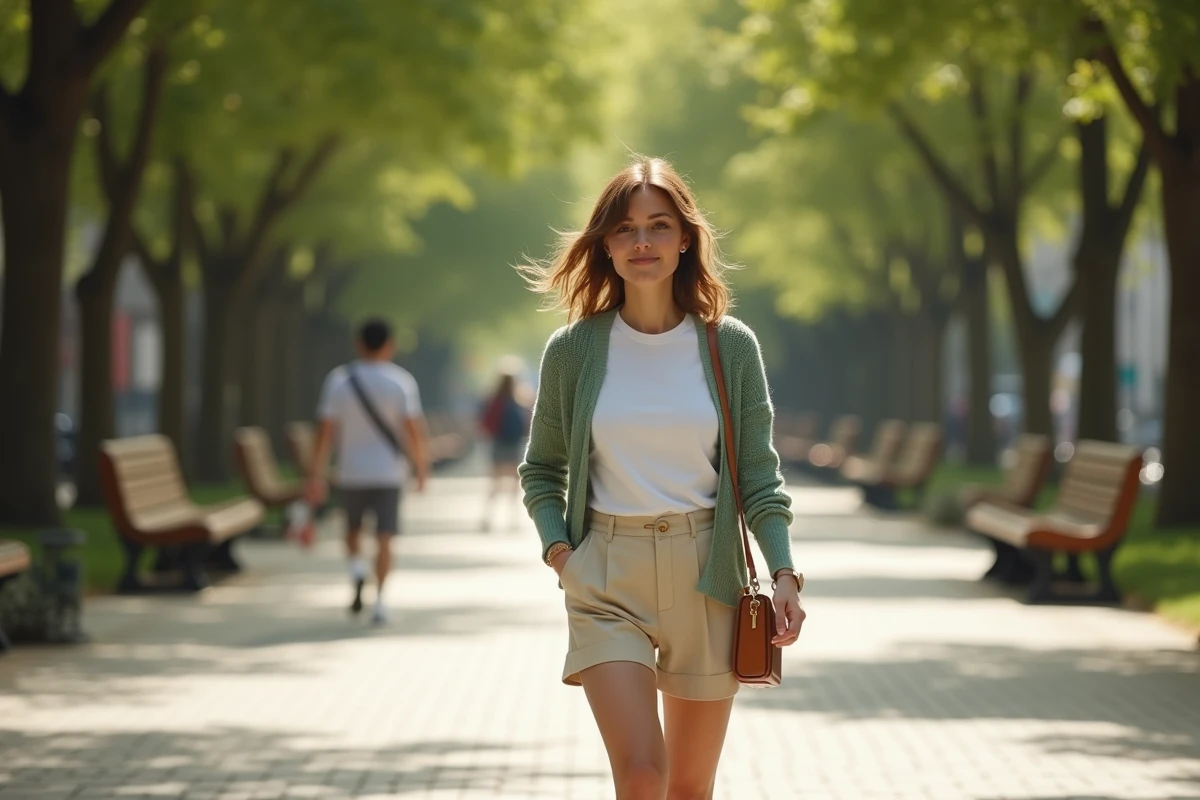
UV protection at 23 °C: integrating sun coverage without sacrificing style
The Skin Cancer Foundation and Cancer Council Australia have reinforced their recommendations on lightweight covering clothing, including outside heatwaves. At 23 °C under a moderate to high UV index, the skin remains exposed, and a sleeveless dress does not protect the shoulders or arms.
Breathable long sleeves are the most effective compromise between elegance and protection. A cotton or fine linen blouse with slightly rolled-up long sleeves protects without giving a wintery look. UPF-rated fabrics, long confined to sportswear, are starting to appear in more dressed cuts.
Pairing this type of top with light fluid pants and open shoes (flat strappy sandals, leather mules) maintains an airy silhouette. Black, often chosen by reflex, absorbs more heat: neutral shades, off-white, or muted pastels work better in full sun.
Accessories and shoes: the details that change comfort at 23 °C
Accessories play a functional as well as aesthetic role at this temperature. A medium-brimmed hat protects the face without the dramatic effect of a beach hat. A lightweight belt on a fluid dress or an open jacket redefines the waist and avoids the “sack” effect.
For shoes, semi-open models offer the best compromise between style and ventilation. Low-heeled mules, fine-strapped sandals, and cut-out loafers allow the foot to breathe without the overly casual look of flip-flops. White leather or canvas sneakers remain relevant for a more casual style, provided they are worn without visible socks or with invisible ankle socks.
The lightweight jacket or cotton scarf tucked into the bag completes the setup to manage the gap between sunny outdoor and air-conditioned indoor, a frequent discrepancy in offices or restaurants.
At 23 °C, the women’s wardrobe benefits from being thought of as a modular system rather than a fixed outfit. Three thin and removable layers are better than a single thick piece, and the choice of fabric often weighs more heavily than the cut in the actual comfort of the day.