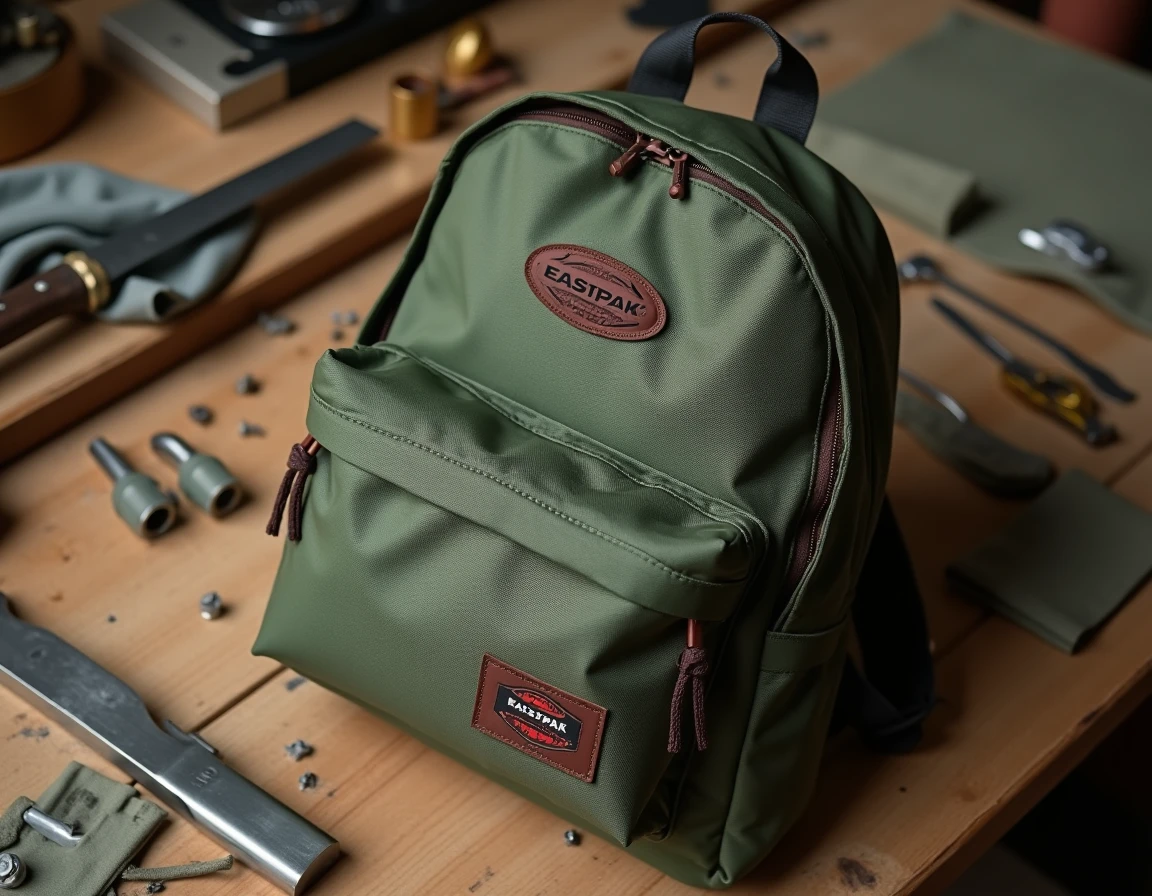
Eastpak has been part of the school and urban landscape for decades. The brand is associated with durability, playgrounds, and daily commutes. The question of where these bags are actually made comes up regularly: production is now concentrated in Southeast Asia, far from the brand’s American origins.
From American Military Gear to Mainstream Backpack
The story of Eastpak begins in 1952 in the United States, under the name Eastern Canvas Products. The initial business had nothing to do with college campuses: the company then manufactured bags and equipment intended for the U.S. military.
This military positioning explains the brand’s DNA. The materials used had to withstand intensive usage conditions, and this requirement for sturdiness was maintained when shifting to the general public. The repositioning began in the late 1970s when the brand started targeting American students.
The Padded Pak’r model quickly became a symbol. Its simple shape, padded back, and thick fabric make it a recognizable product among all. To delve deeper into the origin of Eastpak bags on Pulpe de Coton, several aspects of this transition are detailed precisely.
The shift from military to civilian also changed production volumes. Institutional orders were calibrated, while the consumer market required a much larger industrial capacity, with diversified ranges (backpacks, pencil cases, suitcases).
Eastpak Manufacturing: Vietnam and Indonesia at the Center of Production
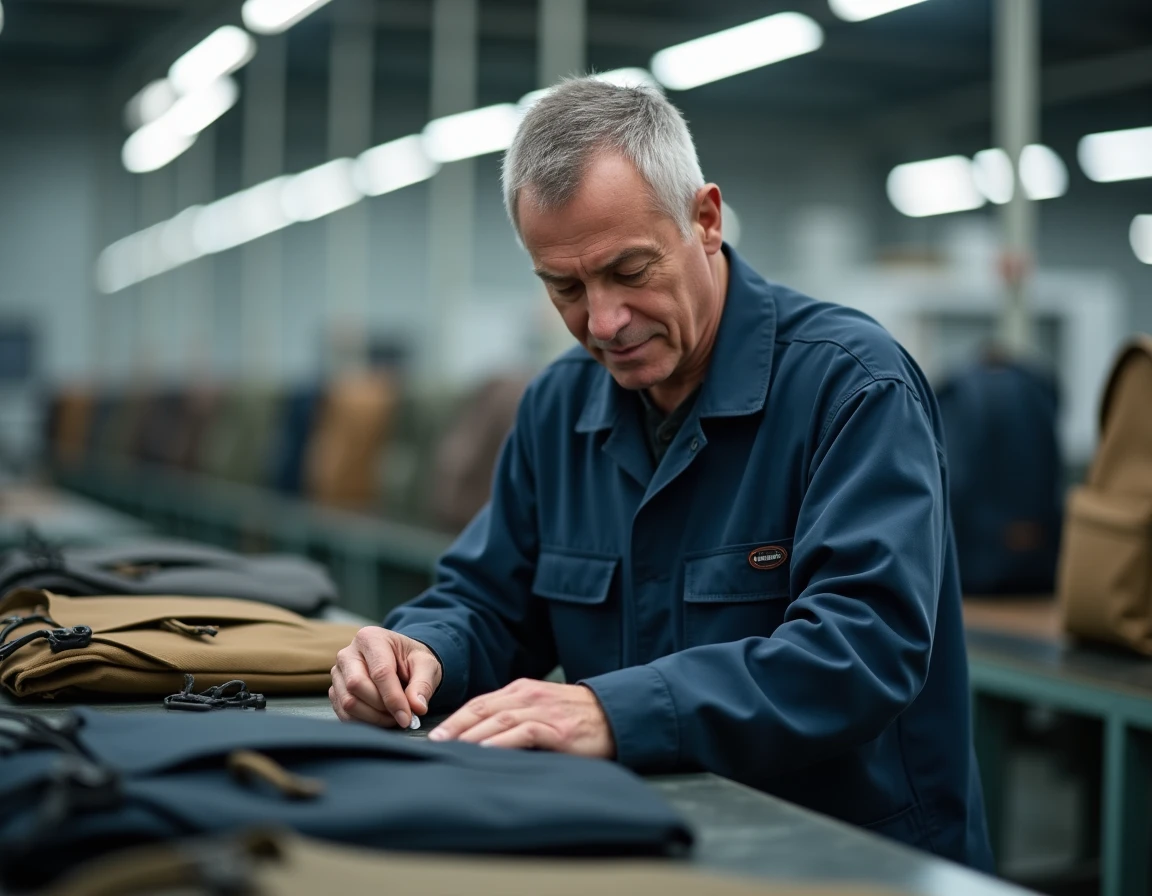
The current production of Eastpak bags no longer takes place on American soil. Factories are now primarily concentrated in Vietnam and Indonesia. This relocation has intensified in recent years, directly linked to the industrial strategy of the parent group.
No European factories appear in the available information on current manufacturing. This point deserves to be highlighted: despite having a European headquarters and communication heavily oriented towards the old continent’s market, Eastpak does not produce in Europe.
This reality is not unique to Eastpak. Almost all consumer luggage brands have adopted similar patterns, where design remains in the countries of origin while assembly takes place in Southeast Asia. The reasons are classic:
- Significantly lower labor costs, allowing for accessible retail prices in a highly competitive market
- A mature textile industrial fabric in Vietnam and Indonesia, with specific expertise in technical fabrics and nylon
- Optimized maritime logistics to supply the European and North American markets from these production areas
The brand communicates little about the details of its manufacturing chains. Eastpak does not publish a precise mapping of its production sites, and information about working conditions in these factories remains partial.
VF Corporation: The Group Behind the Relocation
The acquisition of Eastpak by VF Corporation marks an industrial turning point. This American conglomerate, which also owns brands like Vans and The North Face, applies a group logic to its entire portfolio.
In practical terms, production left the United States after this acquisition. The factories that assemble Eastpak bags can also work for other labels in the group, in a shared industrial circuit.
This integration has consequences for traceability. When a consumer buys a Padded Pak’r, they are purchasing a product designed under the Eastpak license but manufactured in a shared industrial circuit. The guarantee of quality then relies on the specifications imposed by the brand on its subcontractors, not on direct control in owned factories.
What the “long-lasting guarantee” label really implies
Eastpak highlights a warranty of up to 30 years on certain products. This commercial promise is often interpreted as a sign of high-end manufacturing. In practice, the warranty covers manufacturing defects, not normal wear and tear.
The actual durability of an Eastpak bag depends on the model, frequency of use, and type of stress. A bag used daily by a student for five years with a heavy load will not age the same way as a leisure bag used on weekends.
Eastpak’s Ethical and Environmental Commitment: What We Know and What We Don’t
On the social and environmental responsibility front, Eastpak has not published detailed responsible actions according to available analyses. The brand remains discreet about its environmental practices, which places it behind some competitors in the luggage sector that communicate more about their commitments.
The available data do not allow for conclusions about the specific working conditions in the Asian factories that manufacture Eastpak products. Some independent assessments point out gaps in transparency, particularly regarding working conditions in the subcontracting chain.
For a consumer concerned about the origin of their purchases, this opacity raises questions. The sturdiness of the finished product, often highlighted by the brand, says nothing about the conditions under which it was assembled. The choice to buy an Eastpak bag thus relies on a trade-off between material durability (real) and social responsibility (difficult to assess).
- The brand does not publish a standalone CSR report, relying on the global communications of VF Corporation
- The available ethical evaluation scores place Eastpak in a middle zone, with no marked positive or negative distinction
- The longevity of the products can be considered an indirect environmental argument, reducing the frequency of replacement
Ultimately, the manufacturing of Eastpak bags tells the story of a brand born in a U.S. military context, which has become an icon of everyday life in Europe, with production entirely relying on Asian factories managed by a publicly traded group. The product remains sturdy, and the brand has not accompanied its notoriety with detailed communication about its industrial circuits.