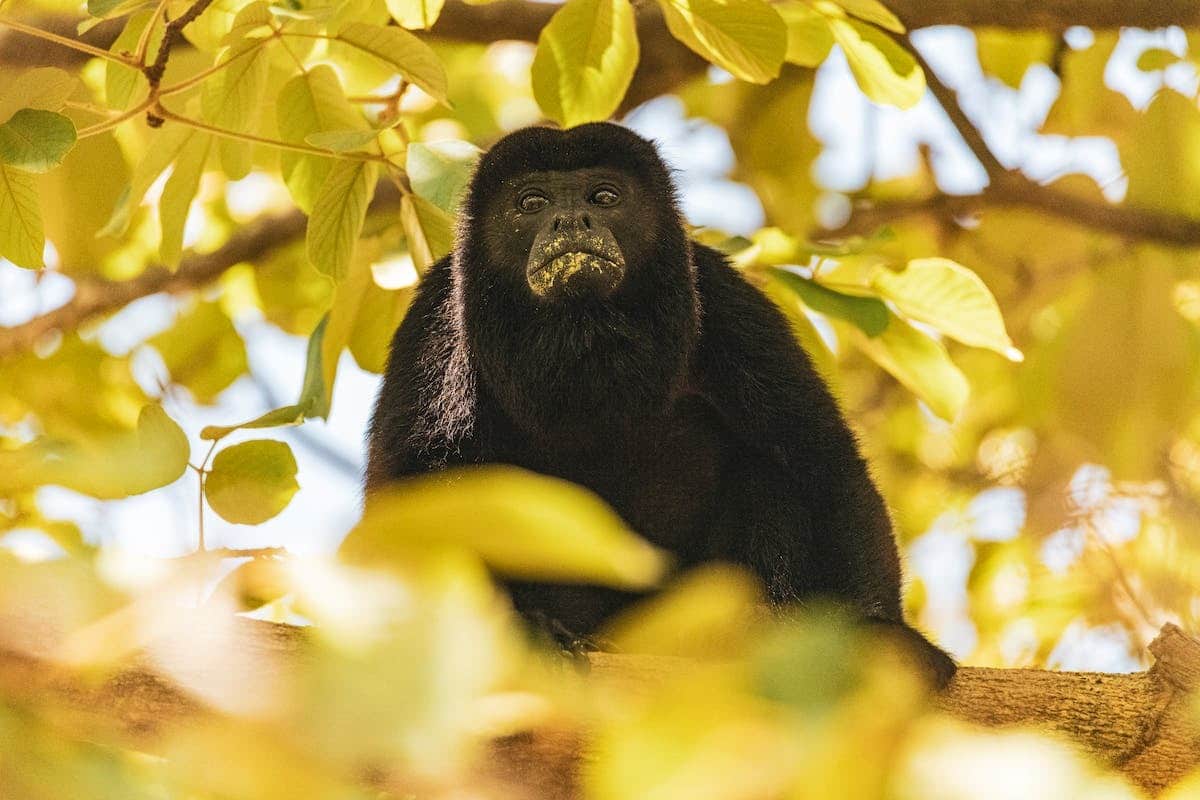
In the vast and diverse fauna of our planet, the red-headed howler monkey draws attention. Primarily residing in the tropical forests of Central and South America, this amazing animal is renowned for its deafening voice that resonates throughout the jungle. Its bright red head contrasts with its black body, offering a captivating visual spectacle. Its unique social behaviors spark curiosity among researchers. The growing threats they face, including deforestation and wildlife trafficking, make their preservation a priority. Learning more about them is to become aware of the importance of their conservation.
The red-headed howler monkey: an unknown species
The red-headed howler monkey, also known as ‘characteristics of the red-bottomed monkey’, is a fascinating species still unknown to many. Its main feature lies in its powerful voice, which can be heard from miles away. The call of the adult male can reach up to 130 decibels, making it one of the loudest sounds produced by a terrestrial animal.
Physically, the red-headed howler monkey is distinguished by its bright red head and black body. Males are generally larger than females and can weigh up to 9 kg. Their prehensile tail allows them to move skillfully among the trees of the canopy.
Behaviorally, these primates live in family groups consisting of a dominant male, several females, and their young. Social interactions are closely linked to the territorial vocalizations emitted to defend their territory against other groups.
The primary habitat of the red-headed howler monkey consists of the humid tropical forests of Central and South America. They are particularly present in Costa Rica, Panama, as well as Colombia and Ecuador. Their range has significantly reduced in recent years due to massive habitat destruction.
In terms of diet, they primarily feed on fibrous foliage as well as various fruits such as figs or mangoes when available in their environment. Their specialized diet requires vast stretches of intact forests, making them vulnerable to deforestation.
Unfortunately, the red-headed howler monkey faces many threats. Beyond the destruction of its natural habitat, it is also a victim of wildlife trafficking.
Physical and behavioral characteristics of the howler monkey
The red-headed howler monkey, also known by its scientific name Alouatta seniculus, is a primate species that piques the interest of researchers and nature lovers alike. Its remarkable morphology and unique behavior make it a fascinating animal to discover.
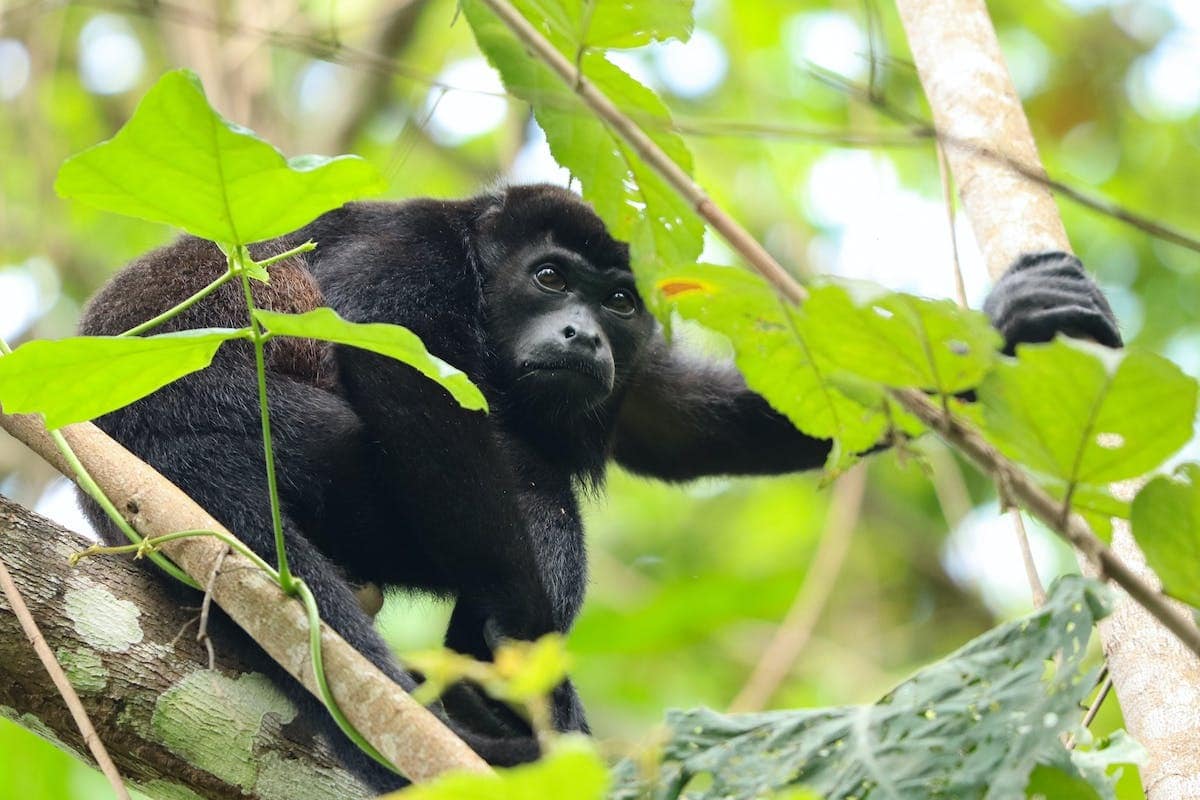
From a physical standpoint, the red-headed howler monkey is distinguished by its imposing size. Males can reach up to 55 centimeters in body length, not including their prehensile tail, which can measure up to an additional 80 centimeters. This tail allows them to swing skillfully between tree branches and access tender leaves located at the tops of forest canopies.
The distinctive color of the red-headed howler monkey‘s fur is another striking element. Their body is generally covered in dense, thick fur of a black hue that contrasts with the vibrant bright red of their head. This unique feature makes the red-headed howler monkey one of the most recognizable primates in its natural habitat.
Regarding their social behavior, these primates primarily live in family groups composed of a dominant male, several adult females, and their young. The social structure relies on a clear hierarchy where the alpha male occupies the dominant position and makes important decisions for the group.
Territorial vocalizations are another important characteristic of the red-headed howler monkey. Their powerful call resonates throughout the forest, allowing different groups to signal each other and establish clear territorial boundaries. These calls can be heard several kilometers away and are often considered a warning to other groups.
In terms of diet, the red-headed howler monkey is primarily herbivorous. Its diet mainly consists of fibrous foliage. They also supplement their diet with ripe fruits when available in their natural habitat.
Threats and conservation of this fascinating species
Unfortunately, the red-headed howler monkey faces numerous threats that jeopardize its survival. One of the main threats is the destruction of its natural habitat. The massive deforestation in the regions where this species lives significantly reduces the available forest areas for these primates.
The expansion of agricultural activities, illegal logging, and increasing urbanization negatively impact the ecosystem of the red-headed howler monkey. As a result, its populations are rapidly and surely declining.
Another major threat to this species is poaching. The illegal trade in exotic animals unfortunately thrives in certain parts of the world. Monkeys often suffer cruel capture to be sold as pets or to feed the black market.
Climate change also affects the survival of the red-headed howler monkey. Higher temperatures and altered precipitation patterns can disrupt their diet as well as their social behavior.
In the face of these serious threats, it becomes urgent to implement effective conservation measures to protect this fascinating species and prevent its imminent extinction.
Efforts are currently being made by various governmental and non-governmental organizations to safeguard the red-headed howler monkey. Reforestation programs have been established to restore degraded habitats and provide new feeding areas for these primates.
Public awareness is also an essential tool in protecting the red-headed howler monkey. Campaigns are being conducted to inform local populations about the importance of conserving their biodiversity and taking action for the monkeys.
International initiatives aimed at strengthening legislation against the illegal wildlife trade should be encouraged. It is crucial to collaborate with countries where animal trafficking is common to put an end to this harmful practice.
The red-headed howler monkey is undoubtedly a fascinating species that deserves our attention and protection. By becoming aware of the threats it faces, we can work together to preserve its natural habitat, combat poaching, and promote its conservation.
If we do not take the necessary measures quickly, we risk losing this precious member of our biological diversity. Time is of the essence, so it is urgent that everyone contributes, in their own way, to safeguarding the red-headed howler monkey for future generations.