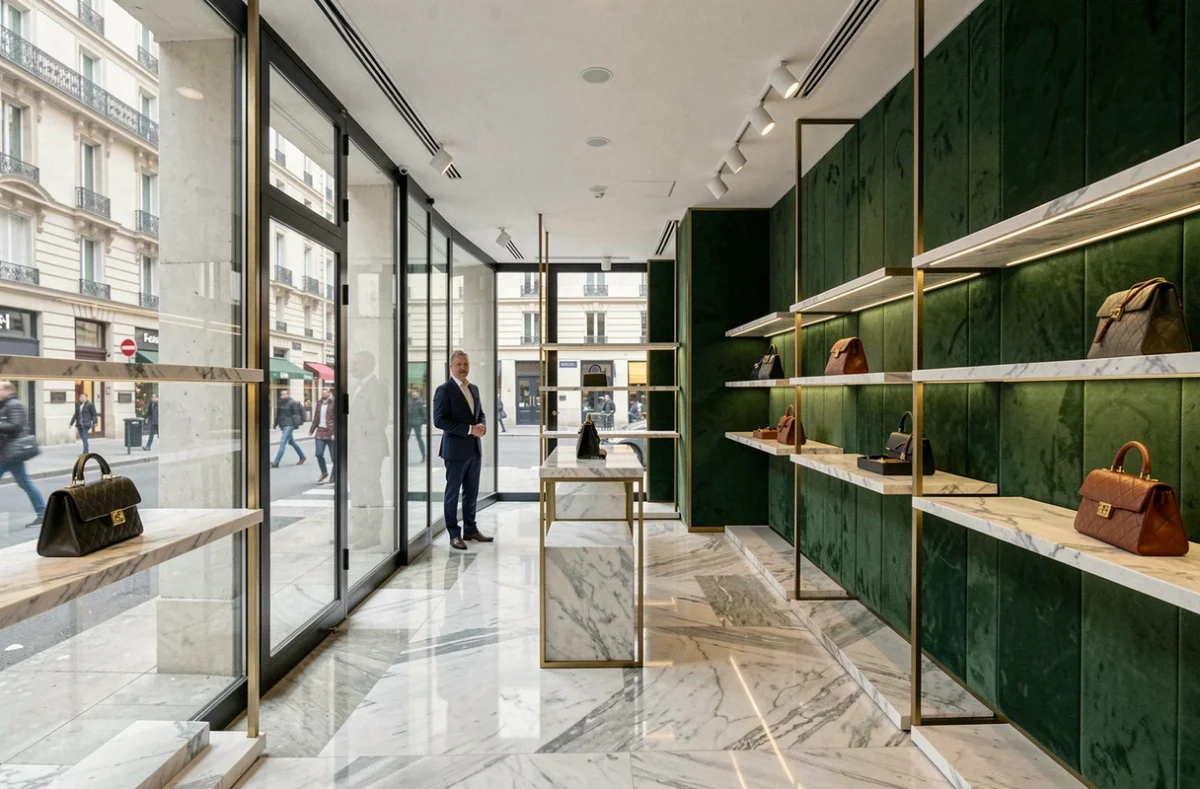
Gucci recorded a 25% like-for-like sales decline in the first quarter of 2025, following a 24% drop in the previous quarter. The brand, which accounted for 63% of Kering’s operating profit in 2024, is no longer slowing its decline—it is deepening it.
Kering posted a net loss of 29 million euros for fiscal 2025, compared with a net profit of more than one billion euros the previous year. The group’s total revenue fell 14% in the first quarter, to 3.88 billion euros.
Gucci store traffic: the real indicator of the crisis
Gucci’s core problem is not reflected solely in consolidated revenue. Kering identifies store traffic as the main drag, particularly in mainland China. Qualitative in-store indicators (conversion rates and average transaction values) have improved in some markets, but that uptick remains fruitless as long as visitor numbers fail to recover.
This distinction is technical but crucial. A brand that converts declining traffic more effectively is merely slowing the erosion. Without visitor volume, neither merchandising nor sales staff training can offset the downward trend in retail revenue.
To understand Gucci’s difficulties at Kering in detail, we need to look back at this structural traffic shortfall, which predates and amplifies all the group’s other financial symptoms.
Kering’s response to the problem in China also involves its local commercial organization. The group plans to give teams in China more responsibility, develop campaigns specifically for the market, and better coordinate launches with key local events. The company has announced plans to produce content specifically for China. It remains to be seen whether this decentralized approach will be enough to reverse a trend that has persisted for several quarters.

Gucci collections 2025-2026: sequencing the product refresh
Gucci’s product strategy is based on a two-stage rollout. The Primavera collection, which began arriving in stores in mid-July and was fully rolled out by September, targeted customers attuned to fashion and trends. GucciCore, focused on wardrobe staples (core pieces and permanent styles), was due to start arriving in stores in November.
This split tests a specific strategic hypothesis: can Gucci broaden its appeal beyond its most trend-driven customers? The brand has long relied on a desirability cycle fueled by highly visible collections. Shifting to a model in which essentials account for a significant share of revenue requires a change in consumer perception.
The wholesale rebound trap
Wholesale growth in some recent quarters should be viewed in context. Kering says the increase reflects a low comparison base and the arrival of orders for new collections. On its own, it does not demonstrate a sustained recovery in in-store demand.
We regularly see this pattern in the luxury sector: a wholesale rebound can shift risk to third-party retailers without improving final sell-through. For Gucci, the real test remains its own retail performance, quarter after quarter.
Gucci without promotions: rebuilding desirability or taking a risky bet?
The fundamental question is whether Gucci can win back customers without relying on promotions and highly visible collections, while preserving the quality and desirability that justify its prices. Demna’s appointment as creative director in July 2025 signals a radical creative bet. His aesthetic, a departure from the colorful maximalism of the Alessandro Michele era, repositions Gucci in a more austere, conceptual space.
This creative repositioning is at odds with the immediate financial imperative. Kering announced 925 million euros in savings and the closure of 75 stores in 2025, with a further 100 closures planned for 2026. The retail network is being rationalized on a massive scale.
- Closures are targeted at underperforming locations, mechanically reducing revenue before any turnaround takes effect
- The stated strategic goal is to return to growth within 18 months—a tight timeline given the scale of the decline
- Net debt has been reduced to 8.04 billion euros (down 2.5 billion over one year), indicating that Kering is prioritizing debt reduction over aggressive investment
The risk is twofold. On the one hand, reducing the physical network’s visibility when traffic is already weak could accelerate market share losses. On the other, keeping unprofitable stores open erodes margins at a time when operating profit still depends largely on Gucci.
Kering’s portfolio: diverging trajectories among luxury brands
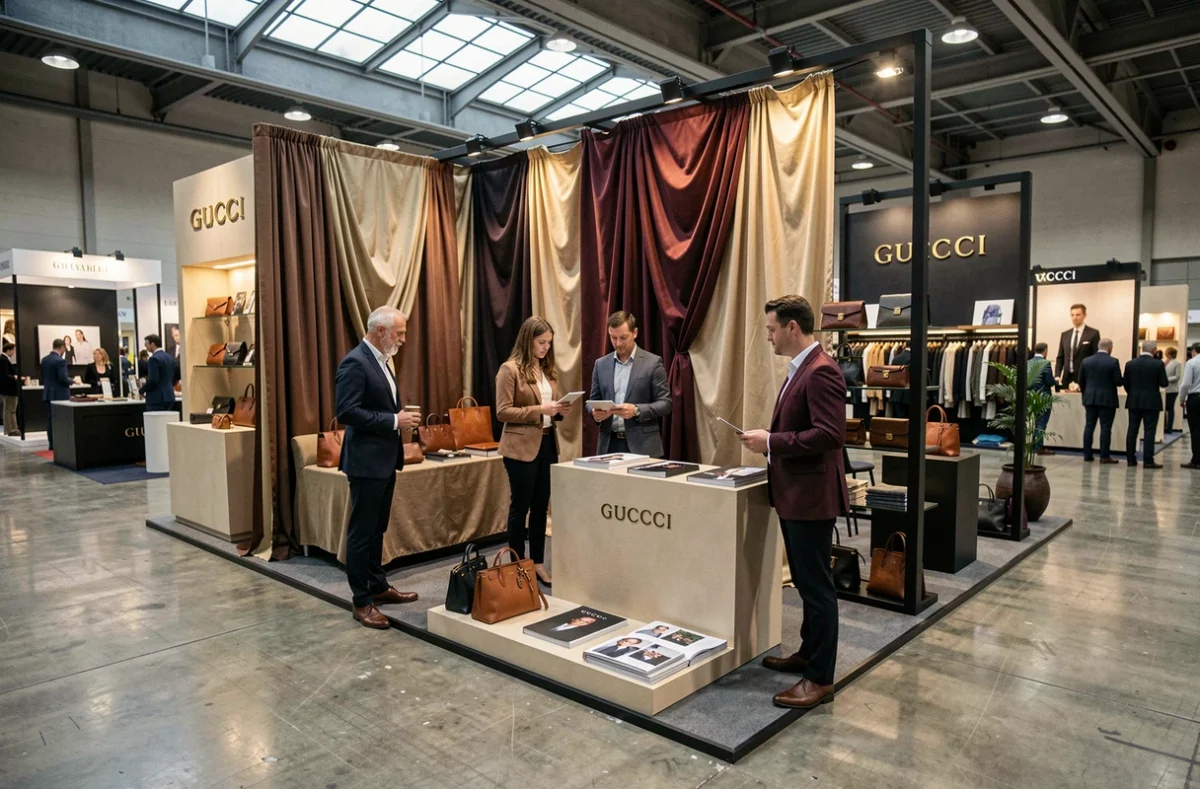
Gucci’s weakness is part of a portfolio with diverging trajectories. Saint Laurent, Balenciaga, and Bottega Veneta are performing differently, but none can offset Gucci’s weight in the group’s profitability. Luca de Meo’s appointment as CEO in mid-September, along with the plan dubbed ReconKering, was intended to transform the business beyond simply turning around its flagship brand.
The picture is clear: even if the other houses hold up or post modest growth, their contribution to profits is too small to absorb a decline of more than 20% in Gucci’s revenue. This structural dependence is Kering’s main vulnerability compared with its competitors.
- Gucci accounted for more than half of the group’s total revenue, making every percentage point of decline disproportionately damaging to consolidated results
- Direct competitors (LVMH, Hermès) benefit from a more diversified portfolio or price positioning less exposed to shifts in trends
- Divestments and financial trade-offs (debt reduction, network optimization) consume management time that could otherwise go toward reviving sales
Kering faces an operational paradox: the group must cut costs, repay debt, and fund a creative refresh at the same time, even though its impact on traffic and sales will not be measurable for several seasons. Returning to growth within 18 months remains an ambitious goal, given the inertia inherent in repositioning a house of this scale.
Gucci’s performance over the coming quarters will determine whether Kering can restore its margins or whether the group enters a deeper-than-expected restructuring phase.