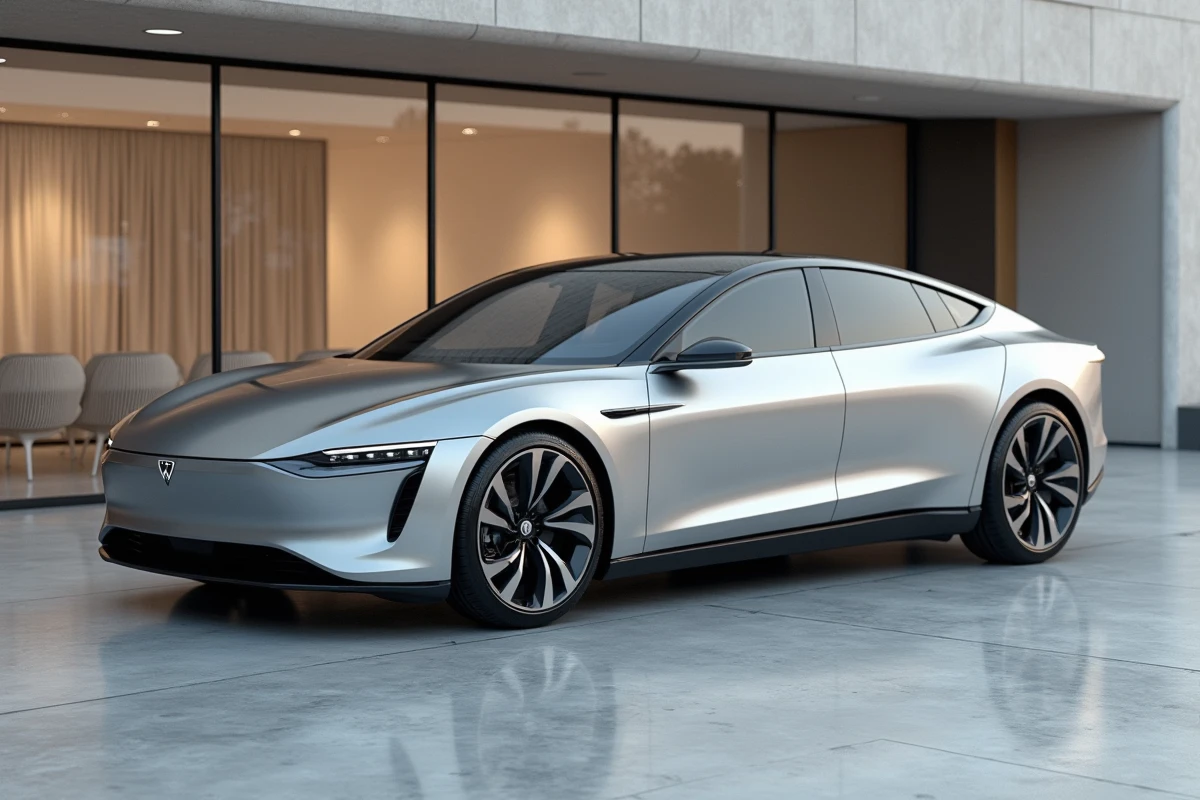
What technologies are currently reshaping the automotive industry, and what gaps are widening between different mobility approaches? The sector is undergoing a phase where electric models, assisted driving systems, and personal data management in connected vehicles are evolving at very different rates depending on the manufacturers.
100% Electric Vehicles vs. Plug-in Hybrids: Where the Technological Gap Lies
The debate over powertrains is no longer limited to a binary thermal/electric opposition. Plug-in hybrid vehicles occupy an intermediate segment that several European and Asian manufacturers are exploiting with very distinct philosophies.
| Criterion | 100% Electric Vehicle | Plug-in Hybrid |
|---|---|---|
| Zero-Emission Range | Several hundred kilometers | Several dozen kilometers |
| Fast Charging Time | Variable depending on battery chemistry (LFP, NMC) | Generally shorter (smaller battery) |
| Mechanical Complexity | Reduced (one or two motors, no traditional gearbox) | High (two powertrains to maintain) |
| Long-term Maintenance Cost | Lower (fewer wear parts) | Higher (dual powertrain) |
| Embedded Data Collection | Intensive (battery thermal management, routes) | Moderate |
The most significant gap concerns battery chemistry. LFP cells are gaining ground over NMC for entry-level and mid-range models, with an advantage in longevity and lower production costs. In contrast, NMC cells maintain a higher energy density, making them relevant for long-range vehicles.
Analyses published on autoworldblog.net regularly detail these powertrain developments and their consequences on the market for new and used cars.
Personal Data and Connected Vehicles: What Embedded Systems Really Collect
The issue of personal data in automobiles goes far beyond GPS. Current embedded systems capture streams that cover driving habits, routes, voice interactions, and sometimes the driver’s biometric data.
Most manufacturers collect between ten and twenty categories of data through consent forms integrated into their mobility applications. The problem: these forms are often lengthy, written in legal language, and validated by the user without thorough reading.
The Most Sensitive Data Categories
- Real-time geolocation and trip history, stored on remote servers with retention periods rarely specified at the time of vehicle purchase
- Driving behavior data (accelerations, braking, average speed), used by some insurers in personalized pricing programs
- Voice recordings captured by embedded assistants, the processing of which may involve third-party subcontractors located outside the European Union
- Information related to passengers via cabin sensors (presence detection, weight on seats), initially designed for safety but potentially exploitable for other purposes
European regulations impose a strict framework on the processing of this personal data, but the practical application in the automotive sector remains uneven from one manufacturer to another. Checking the privacy settings in the vehicle menu and the associated application is still a reflex that is not widespread among drivers.
Autonomous Driving: The Real Levels Deployed on Open Roads
The marketing vocabulary surrounding autonomous driving creates lasting confusion. No mass-market vehicle is currently driving in full autonomy (level 5) on open roads. The majority of marketed technologies are at levels 2 and 2+, meaning the driver remains responsible at all times.
Some manufacturers have obtained level 3 approvals on highway segments, at reduced speeds and under specific weather conditions. This level allows the driver to momentarily divert their attention, but the vehicle can return control to them at any time with a few seconds’ notice.
Key Technologies of Current Assisted Driving
Systems generally combine cameras, radars, and sometimes LiDAR sensors. The choice between pure vision and sensor fusion divides manufacturers. The pure vision approach reduces production costs but requires considerable onboard computing power and massive software training.
Conversely, sensor fusion multiplies information sources and offers appreciable redundancy for safety, at the cost of increased hardware expenses and more complex integration. Both approaches are progressing, and neither has demonstrated definitive superiority in all traffic conditions.

Car Dealerships and the Digitalization of the Buying Journey
The role of the physical dealership is evolving. Online configuration and ordering represent an increasing share of new car sales, changing the balance of power between the customer and the distribution network.
Several brands now offer a fixed price displayed online, with no negotiation at the dealership. This model, inspired by direct sales, removes a step that many buyers perceive as opaque. The online order form is gradually replacing the paper order form, featuring electronic signatures and production tracking accessible via an app.
The dealership is not disappearing, however. It is repositioning itself on test drives, delivery, after-sales service, and personalized advice, all functions that are difficult to fully digitize. Networks that invest in training their teams on these new digital mobility tools maintain an advantage over those that are slow to adapt their model.
The automotive industry is restructuring around three simultaneous axes: the electrification of powertrains, responsible management of embedded data, and the gradual automation of driving. These three areas are advancing at different speeds depending on manufacturers, regions, and regulatory frameworks. The criterion that will likely differentiate brands in the long term is probably not power or design, but transparency regarding the use of data collected by their vehicles.